The History of Coca Cola
John Pemberton had the brilliant idea to transform the popular coca wine, which was invented by French chemist Angelo Mariani in the 1860s. He sought a much cheaper and more available version that did not require wine but instead used carbonated water. Pemberton’s idea for a non-alcoholic version seemed appealing once he added lots of sugar to replace the sweetness and "rush feeling" of the previous wine-coca formula. The sugary, alcohol-free syrup mixed with carbonated water also aligned with the Prohibition enacted in Atlanta and Fulton County in 1885, leading to the birth of Coca-Cola in 1886.
Advertising of Coca Cola and its Inspiration
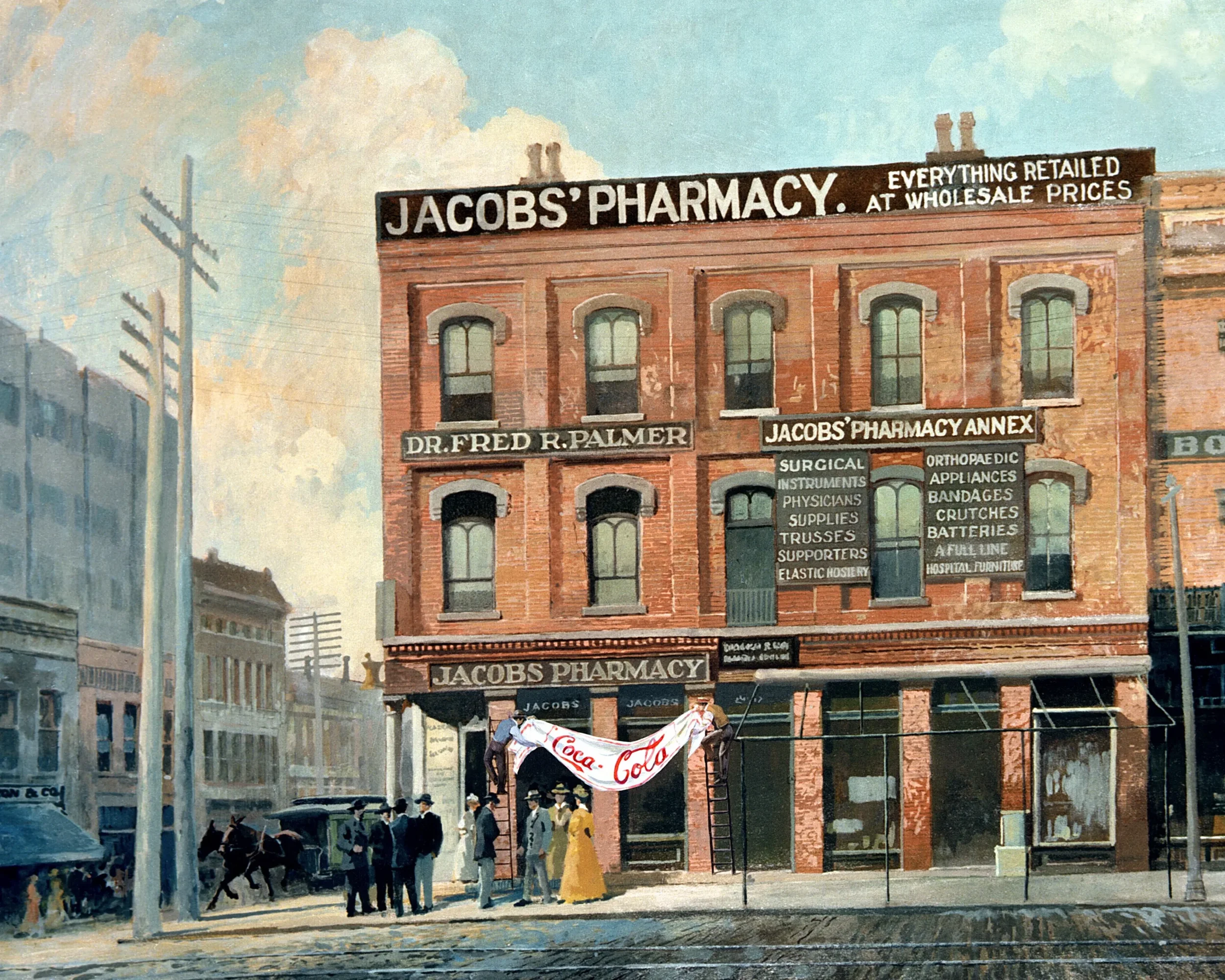
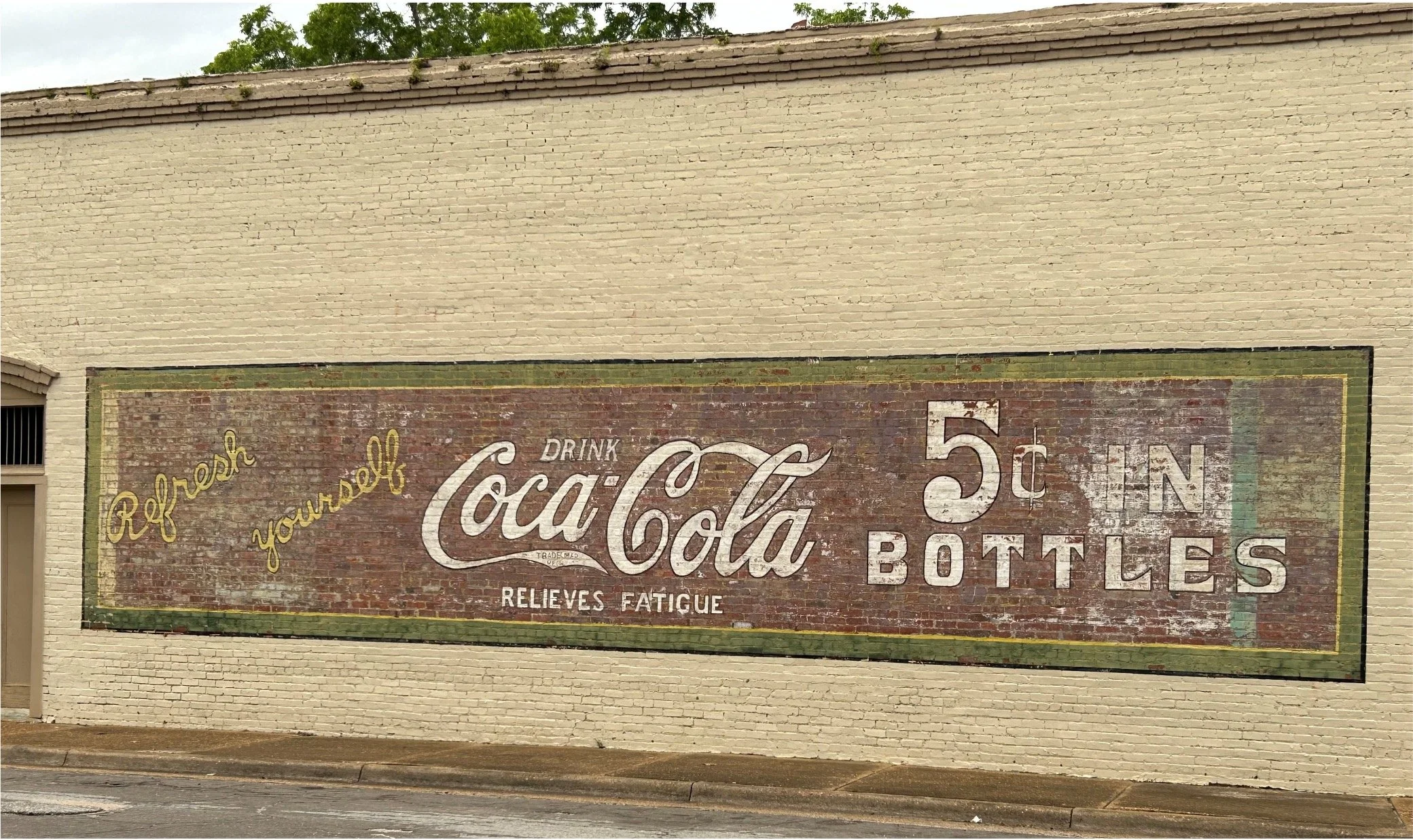
Following the marketing success of the Vin Mariani tonic, Pemberton created a similar business model, the Pemberton Chemical Company, to promote his product Cola along with his new partners Ed Holland, Frank Robinson and David Doe. Robinson and Doe had previously been on the newspaper and printing business. Their skills helped to print the first Coca Cola marketing promotions in Holland’s family business located in 107 Marietta St., Downtown Atlanta. With the idea of targeting wealthy and respectful influential people just like Mariani’s strategy, Pemberton looked for respected establishments in Atlanta that could following those standards. Jacob’s Pharmacy represented the ideal market for his drink. Located in Peachtree Street, the place was always packed with well-dressed men and women, who represented the city’s elite. Coca Cola was initially marketed as a brain tonic and a cure for ailments, including opium habits and menopause positioned as a magic drink for a nation on edge after the long devastation after the civil war. A pharmaceutical trend from the late 1800s that promised medicine solutions for suffering people, consequences from the war and Reconstruction, seen in many of the first mural signs and advertisings with the slogan “relieves fatigue”.
The brand’s successful establishment is connected with the rebuilding of post-war Southern society, which created Coca-Cola’s iconic status. The innovative aspects of the company—its well-developed brand, advanced advertising, and the creation of modern jobs through the independent bottling process—made the emerging brand a local symbol of progress and a landmark in cities that had witnessed devastation before.
Through the conscious decision to attach its name to every step of its evolution and growth, Coke quickly mastered what is now termed Brand Awareness, elevating the product beyond a simple beverage to represent a state of mind and wellness. This powerful, positive image, "a good feeling," is still used across all of Coca-Cola’s marketing campaigns. The future of the brand was secured when the genius marketer, Asa G. Candler, acquired the rights to Coca-Cola before Pemberton passed away. Candler's early and sustained investment in many advertising formats established an influential brand identity that persists and it is still relevant today.
Coca Cola had their logo printed in everything they could thanks to the marketing expertise of John Pembroke, Coke’s inventor, inspired by the European Vin Mariani successful strategies on Coca Wine.
Mural Signs of Coca Cola
Mural Signs of Coca Cola
Prior to the Internet and television, marketing options were limited, making signage ads an essential promotional tool for the ones who were passing by to advertise their products, create brand recognition, and identify storefronts. Mural signs are often referred today as "ghost signs" today because of its fading appearance, were a highly effective advertising format because it provided the best solution for reaching a growing and mobile population in an era of limited mass media. Coca Cola used mural signs to mass advertise their product (either in fountains or bottles) around cities, offering a large-scale visibility that print media couldn't match, especially for the non-reading public. Its iconic and consistent logomark and mural campaigns strategies around Southern cities resulted in the most recognized brand the business has ever seen.
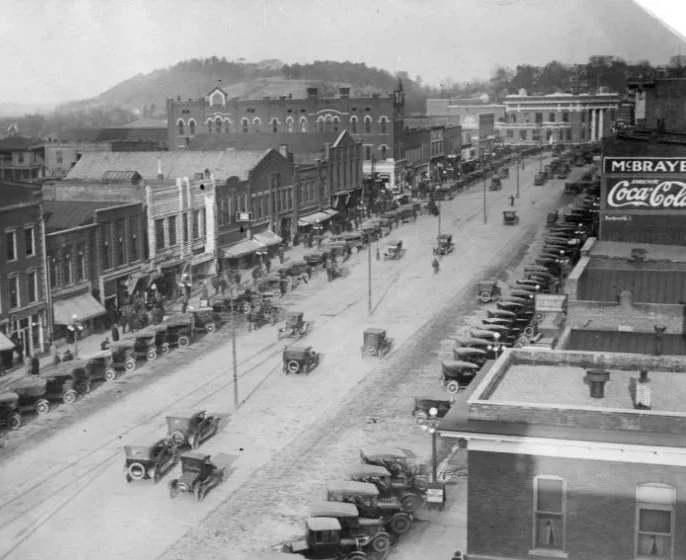
The post-war era required attracting Northern capital and national brands to modernize the region. Mural signs—especially for Coca-Cola, those mural creations were a visual declaration that Southern merchants were participating in the national consumer market. This showed to investors and consumers that the South was open for business. Local merchants needed to identify their businesses and advertise their goods available. Mural signs painted directly onto the most visible structures of each store, were the primary method of storefront identification and promotion of the drink and the stores, benefitting both Coke and the small businesses.
Mural signs created a mark in the 19th century and gave character to small towns where lives saw the exciting shift to the modern world. The brand recognition created by Coca-Cola's iconic logomark and its widespread mural campaigns throughout Southern towns in late 19th century is considered a marketing strategy unprecedented in business history. The visual consistency, logo and distribution the brand created on its mural advertisements made Coca Cola the strongest visual brand with a long-lasting and relevant narrative. A visual connection that survived, tells a story and was transformed over time. From advertising to a sense of home, nostalgia that intertwines with people's lives and urban history.
The importance of bottling companies for the brand
The importance of bottling companies for the brand
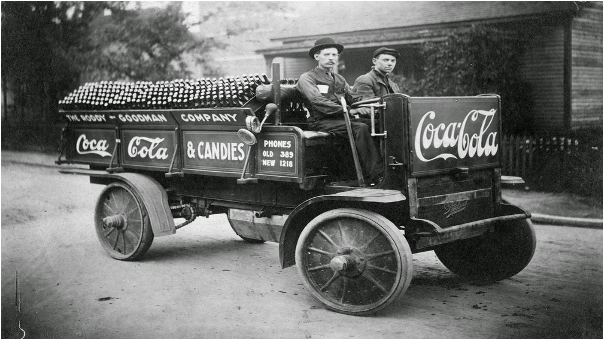
Each bottler was granted an exclusive, geographically defined territory. They were responsible for all operations within that zone, including production, distribution, and local marketing. While The Coca-Cola Company (TCCC) handled national-level advertising (like magazine ads or celebrity endorsements), the bottlers were financially responsible for the local advertising needed to drive sales in their own towns and rural areas. The bottlers' delivery drivers would travel through their entire territory, reaching every corner store and general merchant. This provided the opportunity to identify possible stores to create the signs. A form of direct-to-retail marketing. The bottler would typically ask for permission from the local merchant (the store or pharmacy owner) to use the blank side of their brick building. This would mutually benefit both brand and store-owner: the store got a free, freshly painted wall that had their store's name and segment (example: Pharmacy, Market, Jewelry, etc); and the bottler got a giant, permanent advertisement. Until 1910, the company and its local bottlers painted 16,000 wall murals. This made the logomark well recognized. The Spencerian script and the name "Coca-Cola" were visible in every state and territory—from major cities to the smallest crossroads. This consistent visual presence established Coca-Cola's identity long before the creation of television or modern mass digital media.
In the book The Coca-Cola Trail it’s possible to know every city where bottling companies were distributing those bottles of Coke, letting the community know the establishment had the soda available for them.
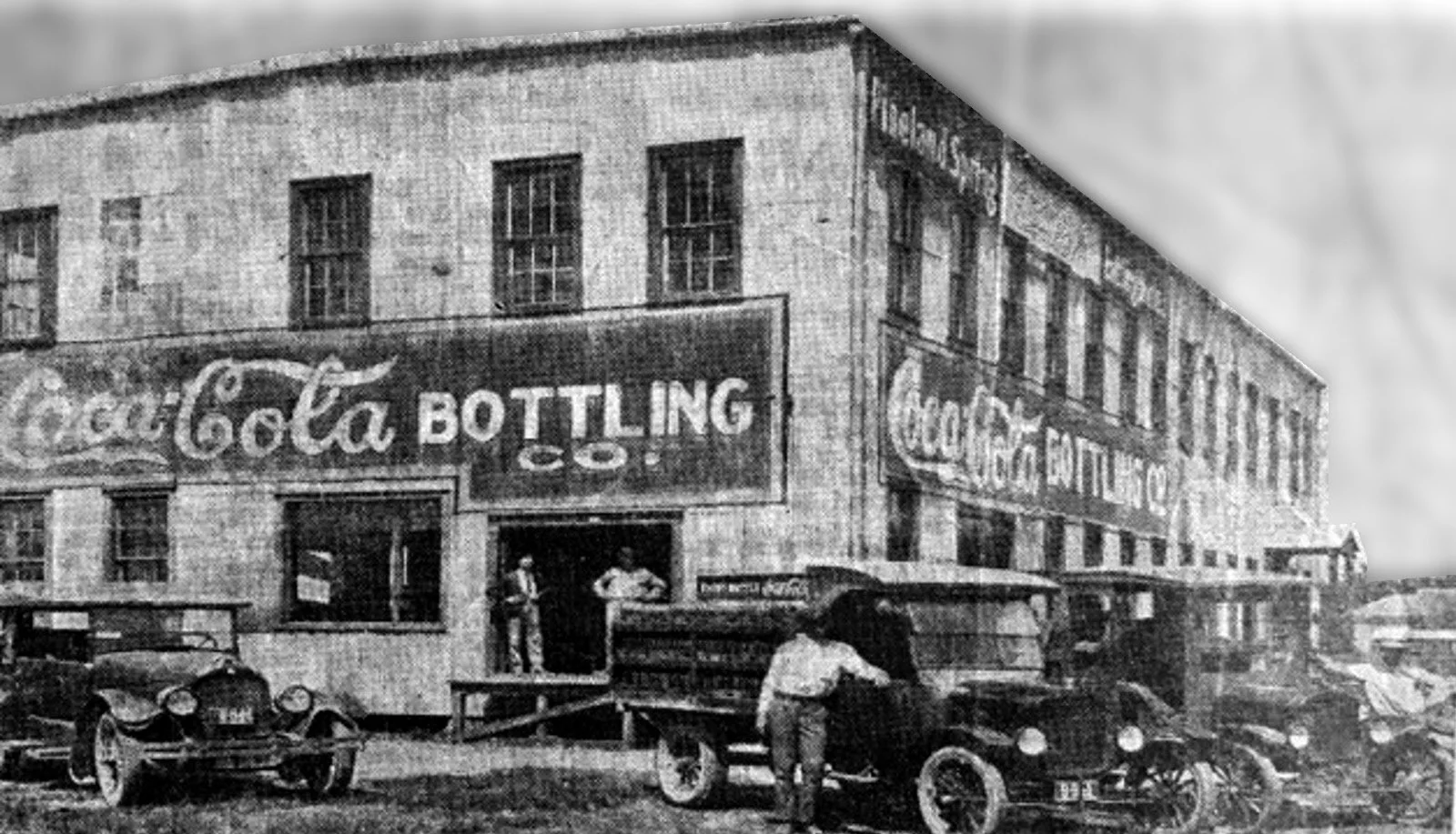
The distribution of Coca Cola in bottles that started between 1894 and 1899, made the bottling companies work independently from the Coca Cola Company distributing the soft drink initially around cities in the South of the United States, reaching even the smallest rural areas. The bottlers were responsible for most of the mural paintings because of the mobility distributors had while travelling deliver the drinks. They were responsible for marketing and brand-building in their territories passing on the culture of advertising storefronts. Although independently created, these murals helped establish a consistent national image and spread the Coca-Cola brand, its image and message.
What is a Ghost Sign?
What is a Ghost Sign?
They weren’t meant to last this long!
Ghost signs are hand-painted advertising murals visible on old store fronts or the sides of historic buildings. They are defined by their original, unrestored 'ghostly' fading form, resulted from decades (up to century) of natural decaying. These signs mark sites that were local businesses from the late 18th to the early 19th century but are no longer open. Most of the brands don't exist anymore but its signage survived time.
Most of the signs were created from 1880s to 1950s, when the hand-painted wall advertising industry was a very popular form of market identification. The term “ghost signs" was officially introduced in 1989 by William Stage in his publication, Ghost Signs: Brick Wall Signs in America to describe faded brick wall advertisements. Ghost signs go through nature’s seasonal changes. They suffer severe sun expoosure, hurricanes, rain and simply the hardness of the passing of time. To be considered a ghost sign, they also need to be over 50 years old and hand-painted.
The paint used for these signs contained lead and oil in its formula, which is no longer approved by federal agencies such as the Environmental Protection Agency (EPA), the Department of Housing and Urban Development (HUD), and the Consumer Product Safety Commission (CPSC), following their ban implemented in 1978. Since the signs stopped being popular after the 50s, it's safe to say that all mural signs survived time due to its lead-paint composition.
The murals made to advertise Coca Cola were made by local sign painters: The Coca Cola Company most likely provided the logo and slogans to the artists, but only 1920s Coca Cola created their standardization guidelines to ensure quality control in both production and visual identity. The murals created before the visual standardization of the brand present different variations which adds to the unique, historical charm of the surviving "ghost signs" today. After the 60s, the murals were not the brand's first option of advertisement because they were being substituted by neon, outdoors, and television.
Urban Archeology
Today, these historic Coca-Cola murals—painted between 1894 and the 1950s—are valued as more than advertising; they are a form of urban archaeology. The original creators could not have anticipated that these signs would survive as crucial remains of former urban commerce offering historical proof of human habitation and urban development.
Sometimes, as any other archaeology discovery, surprisingly you can find an old authentic sign that has not suffered the passing of time by simply breaking a wall while restoring your old hardware store or after a tornado destruction. A piece of urban archeology that explains the development of that exact place through time. This is what happened in 2014 at Smith T Hardware and Building Supply in Opelika, AL. Smith T was peeling away an old plaster from the walls of his building when he found a Coca Cola mural sign hidden behind plaster. Smith T's family hardware business, founded by his grandfather in the 1920s had an original sign that had been completely covered up by a few inches of plaster. "It's amazing that someone wanted it hidden," Smith T said, "because we think it's the best thing that could happen to this store." The sign brings elements that allows experts to date the art. In Smith T’s store, the sign has a bright green Coca-Cola scroll, and a "five cent" sign advertises the cost of a Coke from the early 1900s. A piece of history that is still living in its almost perfect format because of its hidden condition, not affected by the sun, rain and natural decaying process with time.
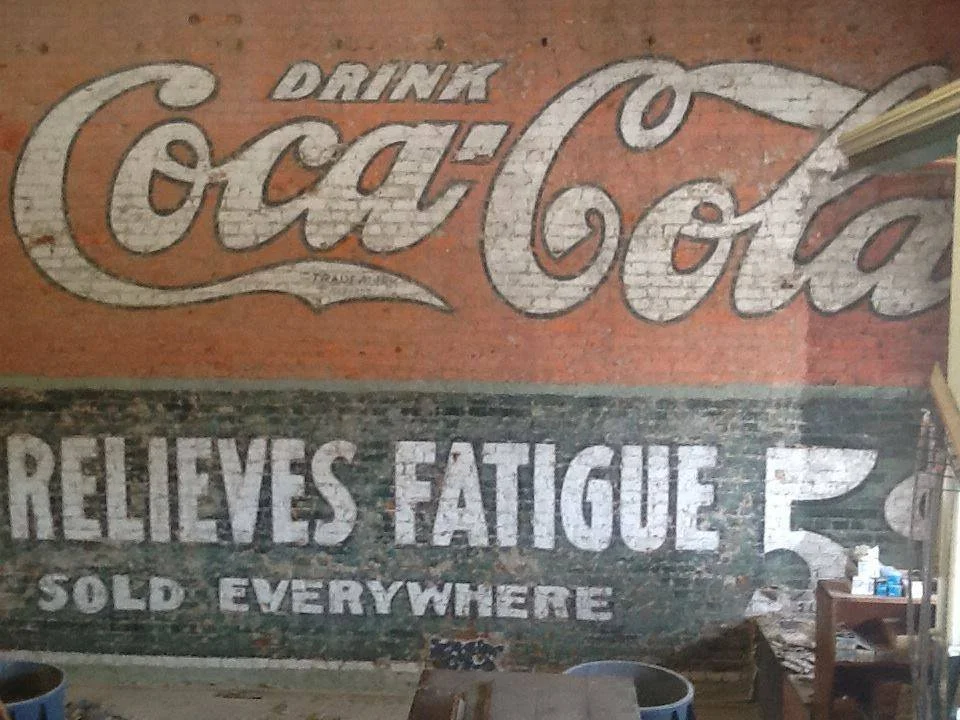
“It’s amazing that someone wanted it hidden because we think it’s the best thing that could happen to this store.”
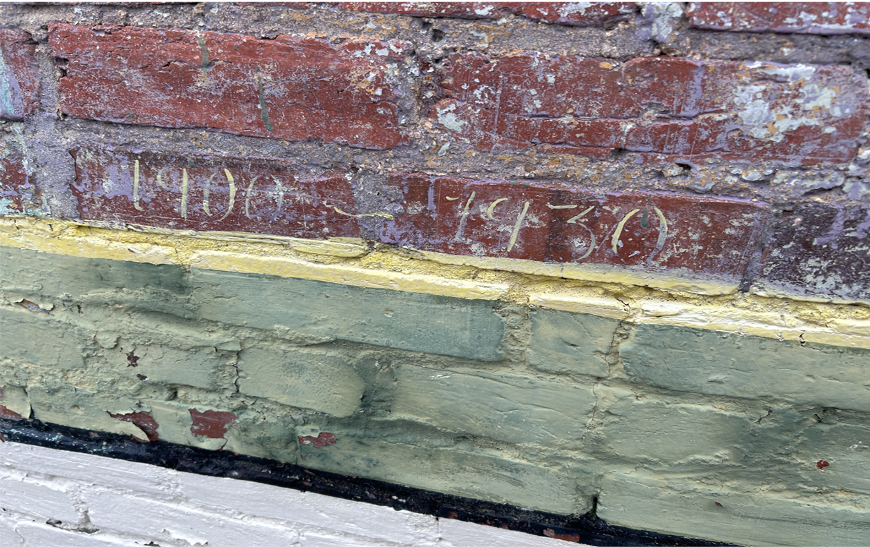
Dating a Ghost Sign
Dating a Ghost Sign
A mural in Fort Gaines, GA, was approximately dated by analyzing its remaining colors. (Image courtesy of Coca-Cola United Bottling Co.)
There are not formal documents that prove the date of creation on most of the signs. But looking closely, it's possible to find elements that can help date those murals.
-
To effectively date signs, specialists analyze a few elements such as slogans used to advertise the drink. It varies per period of time. For example, "Delicious and Refreshing" was created in 1904 and "The Pause that Refreshes" in 1929.
-
Sometimes it’s possible to get close to a realistic date looking at black and white pictures from the Historical Societies or even taken by citizens. But if restorers are lucky, they can find pieces of ink remaining in the bricks, making it easier to determine the “era” it was painted. Colors help restorers to get a more realistic original color that's similar to the original sign.
-
Elements such as mascots and bottles present in the design of the mural helps historians and restorers to date the mural. When those elements are spotted, it’s easier to trace the era of Coke it was created on.
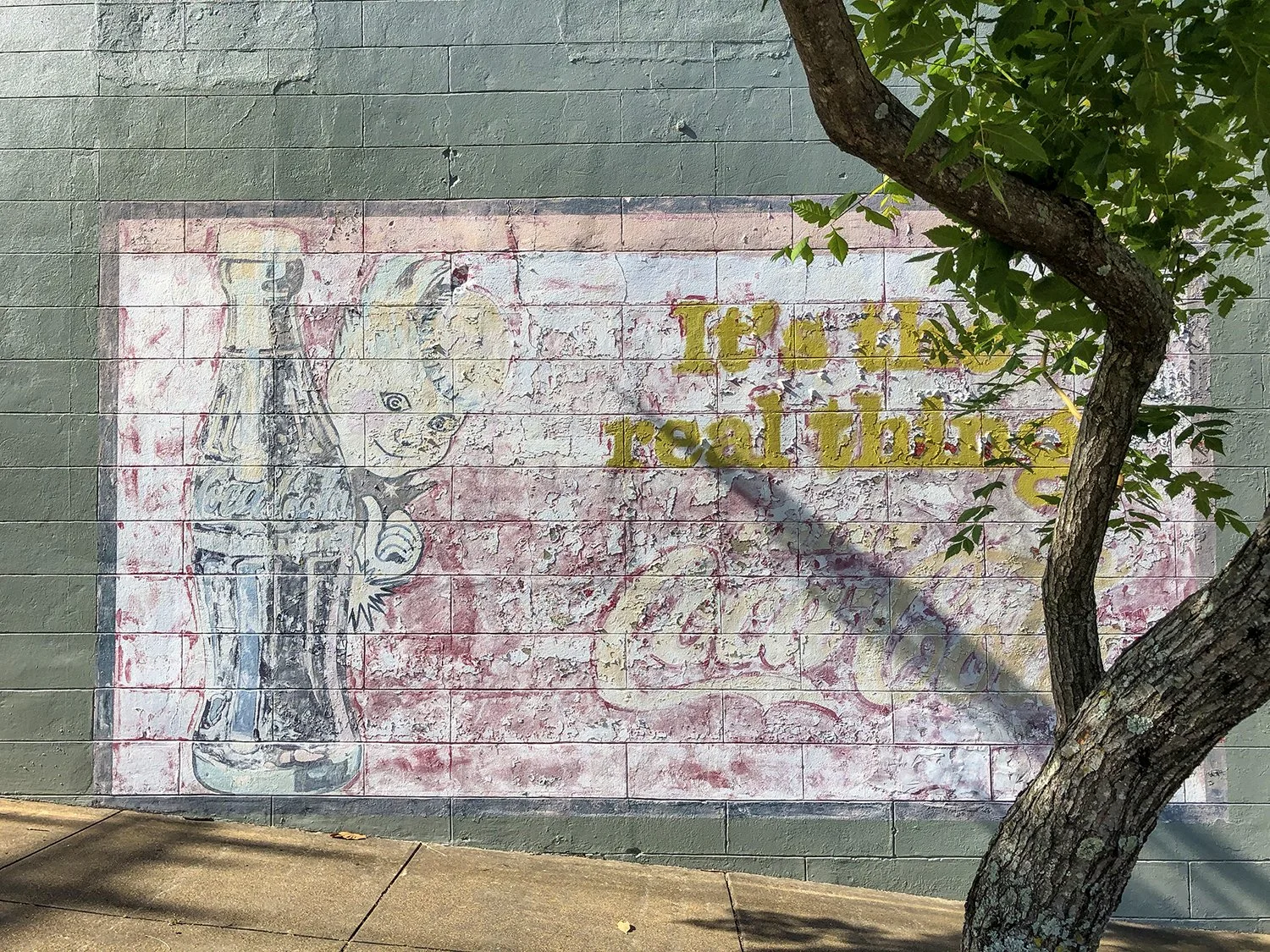
The remaining colors helped to date this mural in Fort Gaines, GA, to the period of 1900–1930.
A ghost sign with Sprite Boy, a mascot used from 1942 to 1958 in Vicksburg, MS.
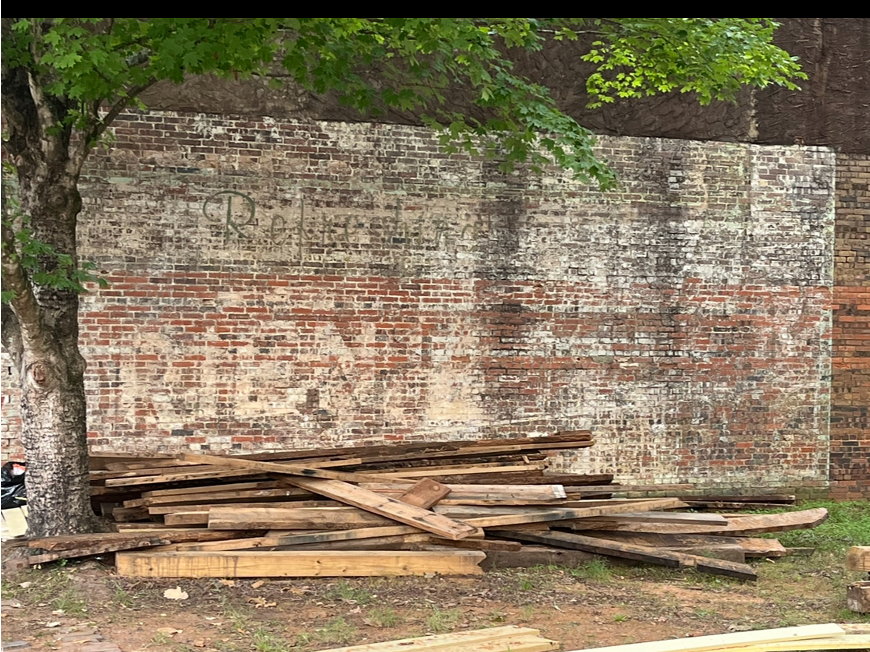
Remaining of “Refreshing” logo in Waverly, AL.
The Coca Cola Company used this logo between 1886 and 1904.
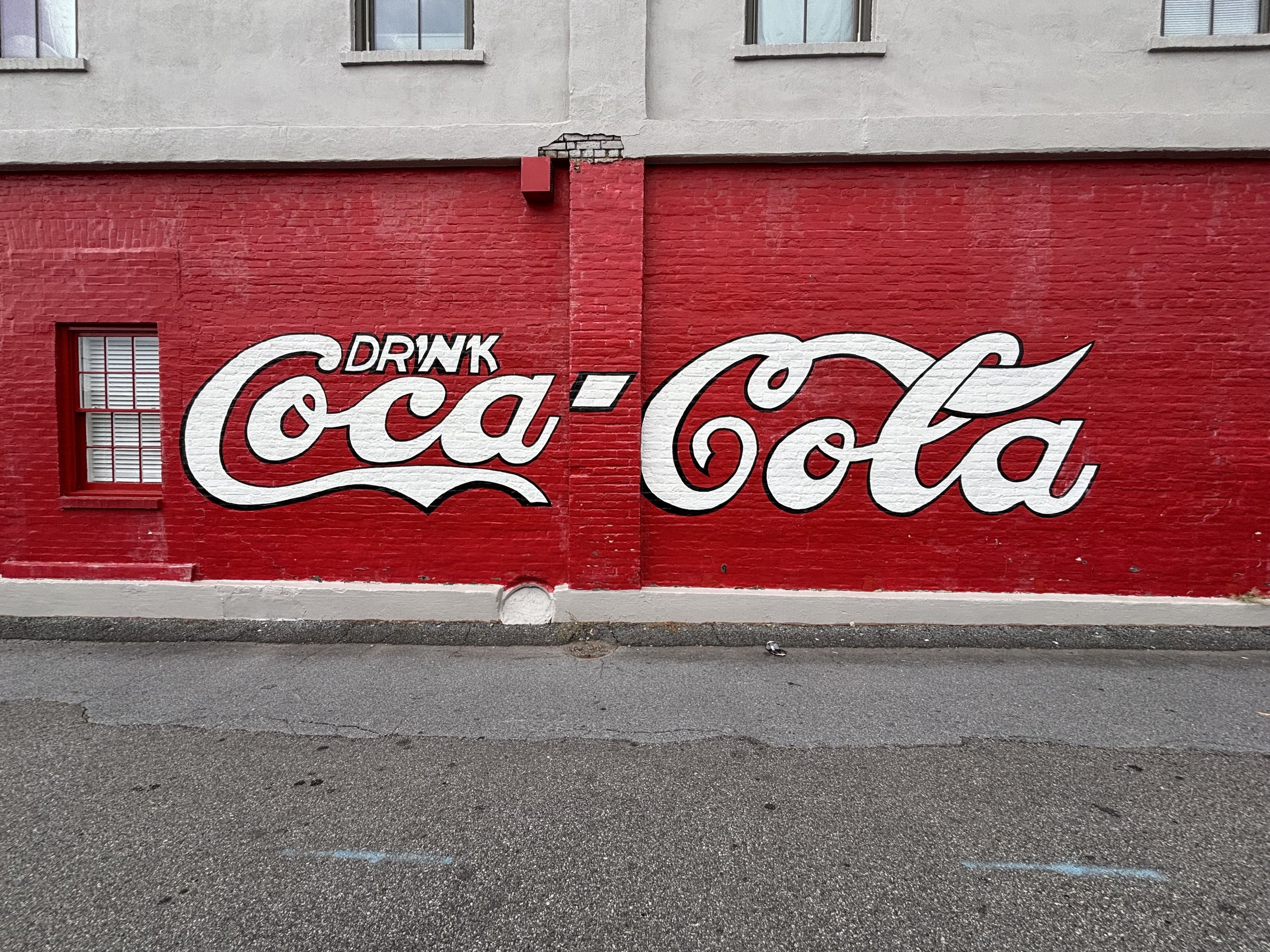
The first Coca Cola Mural Sign
Originally from Columbus, GA, Mr. John Permberton came to Atlanta to sell his newest creation in Jacob’s pharmacy in Downtown. Atlanta was the number one Southern city after the war’s devastation. It was where everybody with money was investing. Pemberton thought it would be his great shot of selling his syrup of Coca-Cola. What he didn't know was that Coca-Cola was going to become one of the most popular drinks of all time. Before Coke was sold in bottles, places like Young Brother Pharmacy in Cartersville, GA were selling the syrup in fountains. A rarity back in 1890s, due to its small distribution at the time. Making the Coca Cola mural sign in Cartersville, the oldest mural sign of Coca Cola, belonging to an era where Coke was distributed only in syrup, in its early stages of life.
THE NOSTALGIA ASPECT OF THE SIGNS
The Coca-Cola murals were originally created as advertisements but was transformed them into powerful cultural pieces. Now faded and weathered, these silent "ghost signs" are visual reminders of the past. This section shifts focus from the signs’ commercial origins to their profound cultural afterlife. These faded signages on the brick walls of old towns symbolize a romanticized view of a simpler, pre-digital age of community and commerce.
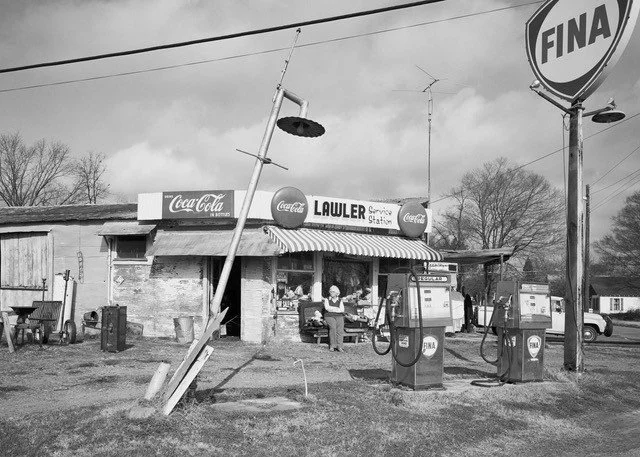
Source: Blackburn Pictures Inc. authorized by author
Mural signs are the first mass advertising format we've known, and they now represent, in their silence, an old-modern era and aesthetic that no longer exists. The shift from the signs as original commercial tools to their contemporary, decayed state is what creates their cultural meaning. Ghost signs have evolved into a unique, frozen piece for those who look for places that represent a past that no longer exists.
This search for frozen moments that tell a story of classic Americana is a constant goal for those specialize in visual urban archaeology. I had the opportunity to talk to Charles Blackburn, a photographer specializing in urban decay and Americana art. Blackburn travels across the United States, documenting places that, despite their neglect, still carry the historical weight of a touched past, places that now looks like ghost towns and past memories, captured by him with incredible nostalgia and sensibility. I discovered his Instagram page some time ago and was immediately drawn to his ability to capture this feeling that mixes sentiments such as sadness, history and affection. In our conversation, Blackburn explain the connection between his own story to his art, as Charles shared his thoughts:
“I’ve been drawn to Coca-Cola signs ever since I was a kid, riding in the back of my parents’ car on road trips. There’s something hard to explain about them — the way they mark a place, bold and bright, standing out in landscapes that often feel empty or forgotten. To me, these old ghost signs are quiet storytellers from another time, reminders of when hand-painted advertising was part of everyday life. Then there’s the question of “Coke Town” versus “Pepsi Town,” the regional patterns of advertising, which adds another layer of history and context. In my work, I try not only to document that history but also to create compositions that might one day be seen as art. Over time, these commercial signs have transformed into something more — unintentional beauty, a glimpse of nostalgia, and a reflection of memory and the passage of time.”
— Charles Blackburn
Photographer of Urban Archeology and Americana Art

Sign Painters
The Wall Dogs
Wall dogs were commercial artists who specialized in painting advertisements hired by companies to hand-painted advertisements directly onto the brick walls. They were essentially high-altitude muralists with precarious platforms called "roof swings" where they would be dangling dozens of feet in the air while working with heavy brushes, paint pots, and layout tools.
"Walldogs" are expert painters who can scale up small design drawings, usually logos such as Coca-Cola, to cover plain brick walls in storefronts. They had to make sure the lettering and images looked correct, even if they had to align and cover the walls' imperfections. They used techniques like gridding or pouncing (perforating a pattern onto paper and then tapping charcoal through the holes) to properly transfer the design outlines to the wall.
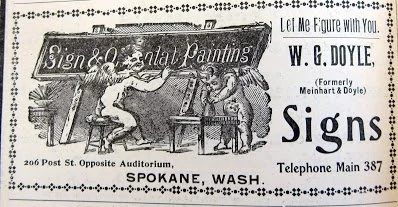
They mixed their own oil-based, lead-heavy paints (which is one of the reasons why the signs lasted so long) to create the colors and textures of mural signs. Signs were a profitable business until the 1950s. While researching this practice, I came across an old advertisement made by W. G. Doyle (formerly Meinhart & Doyle). The business provided mural painting services in Spokane, WA. It's believed that this advertisement dates back from the late 1800s to the early 1900s. The simple telephone number ("Main 387") is also consistent with this era, making this ad a historical document from the early 1900s when "walldogs" were working at their peak.
The name "wall dog" is thought to have originated for two main reasons, both referencing their difficult work conditions:
-
They were known for working long, hard hours in all weather conditions—from the sweltering heat of summer to the freezing cold of winter—to finish a job quickly.
-
To work safely high above the ground, they were literally chained or tethered to the building, much like a dog on a leash.
Spokane City Directory, 1903.
I was lucky to find a conversation between Bill, a former Wall Dog from Philadelphia and Living Gold Press in their website. Bill explained the journalist the process of an old-school wall dog back in the day:
“My family goes back quite a way as painters. My great grandfather was a house painter, and I still have packets of different colors with how to mix the white lead, linseed oil, dryers and pigment to attain colors. The old sign painters did the same. That’s why the signs still show after all these years. We worked where the signs took us, whether twenty stories in the air or six feet off the ground. Rain, snow or sunshine never seemed to be a factor, just get the job done. The knowledge we learned in the business was handed down through generations, one sign man to another. Layout, lettering skills, font types and art skill were just a few of the factors that made a good sign person. Some of the best artists and advertising people have been sign people; we were called upon to create and execute the best advertisement possible for the client. Computers have taken the place of many hand-painted signs, but they are only as good as the person behind the keys. Believe me, us old sign people have seen some very bad advertising out there. I’ll bet you won’t look at the old signs quite the same again; there’s a human factor there that will never be seen again. ”
I was fortunate to talk to a modern-age mural sign painter, Skip Bondur, who specializes in mural sign restoration. Skip is from Panama City, FL, and has restored many murals, including one in his own hometown alongside Coca Cola United Bottling Co. Skip travels around the South restoring signs in states such as Alabama, Georgia and Tennessee. He's a part of the Mural Program created by Mr. Andy Britton, United's Director of Public Affairs and Communications with the goal of restoring historic Coca Cola ghost signs. In an interview, Skip and I discussed the process of his efforts to bring those historic pieces back to life.
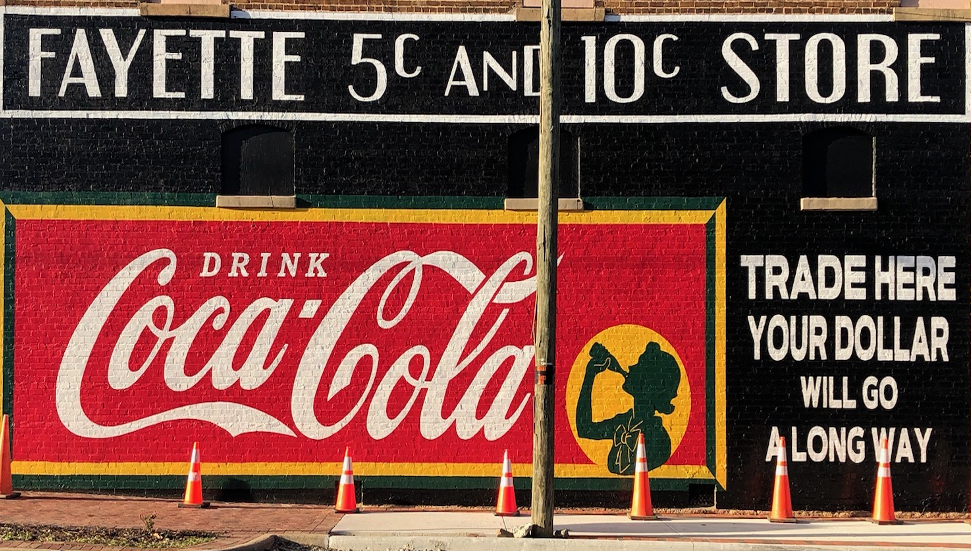
RESTAURATION OF GHOST SIGNS
Restoring these "ghost" mural signs goes beyond commercial advertising: it gives back to communities a meaningful historic piece, re-engaging them with their own story and reoccupying their local spaces. The old piece in its new format gives them a new meaning and for all of those surrounding them. They attract economic development. When a sign is restored, it contributes to residents' civic pride, economic growth and gives the population a feeling of being part of their community. To me, ghost signs were always something much more than advertisement. Besides the fact that they've survived time, a ghost sign tells a story, even if few people are paying attention to them, companies such as Coca-Cola United Bottling Co. are ensuring those murals are brought back to life through the process of restoration.
I had the opportunity to meett Mr. Andy Britton, the Director of Public Affairs and Communications of Coca Cola United Bottling Co., learn about his efforts to restore historic signs of Coca Cola with the "Mural Program" in the South of the United States. The program focuses on the restoration of existing, historic signage, it does not create new murals. He is confident that these restored signs breathe new life into communities, cultivating belonging where spaces were previously overlooked, resulting in a booost to local commerce.
For the restoration event, Mr. Britton ensures a celebration by bringing the official Coca-Cola Polar Bear, providing Coca-Cola products, and including key figures such as mayors, local business owners, and sometimes even the original "wall dog" (or their living family members) to witness the transformation. Most importantly, the company invites the community's elders, whose personal stories are closely intertwined with the history of the signs.
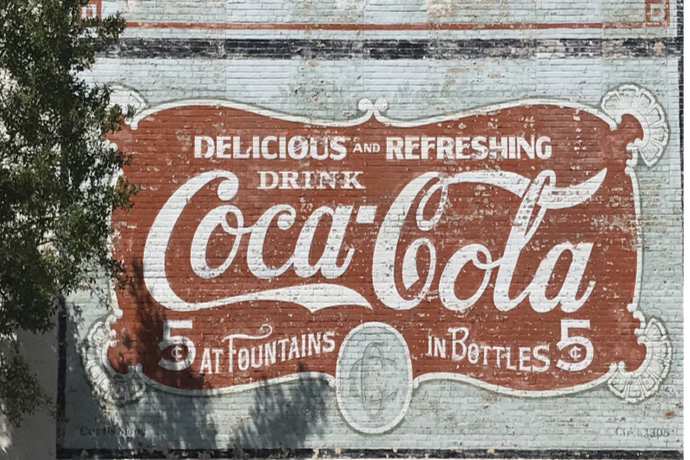
Before
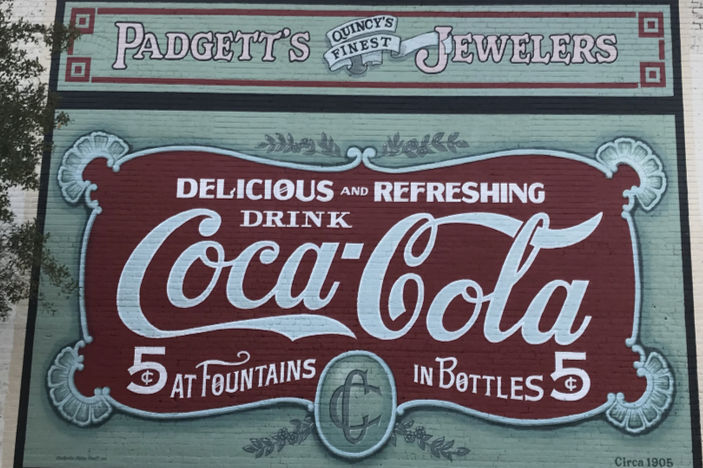
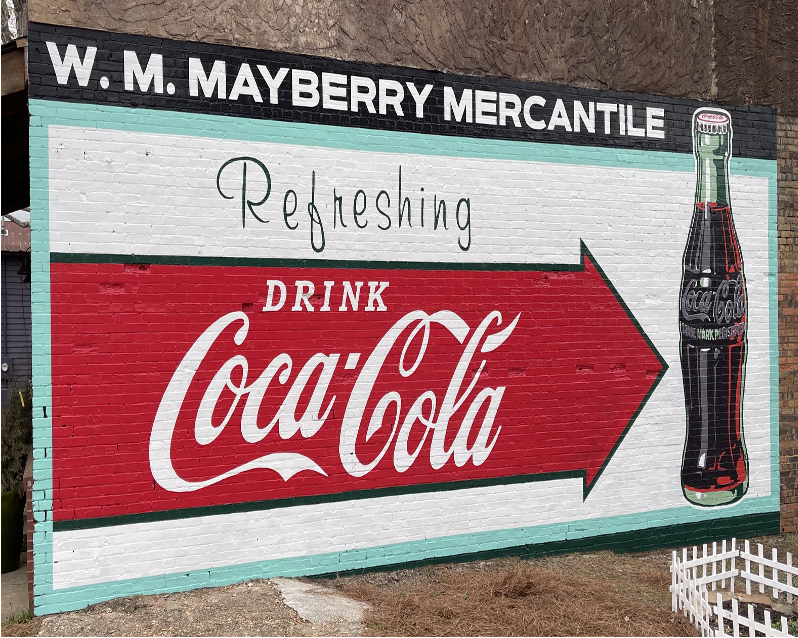
After
Mr. Britton's Mural Program: unveiling a restored mural in Quincy, FL.
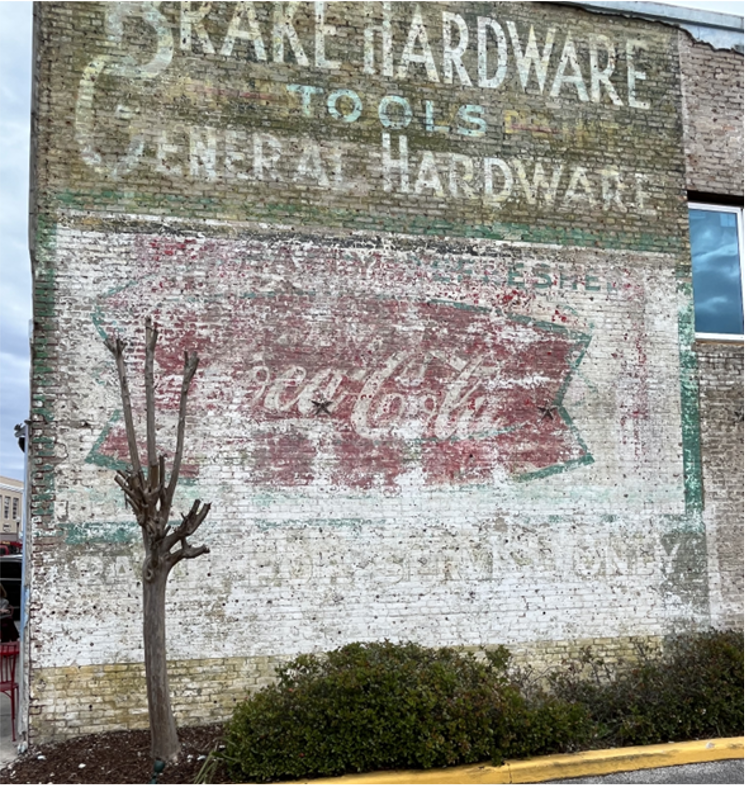
Before
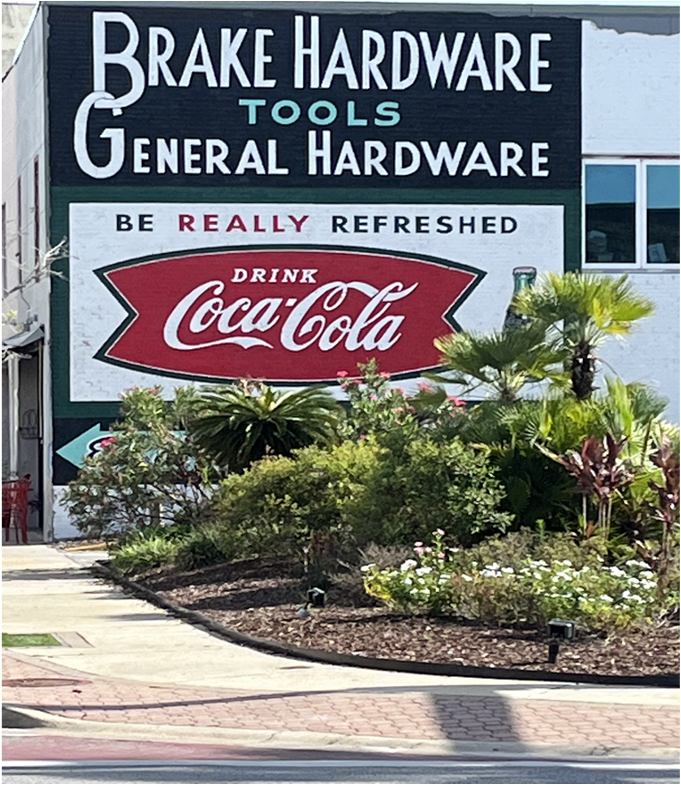
After
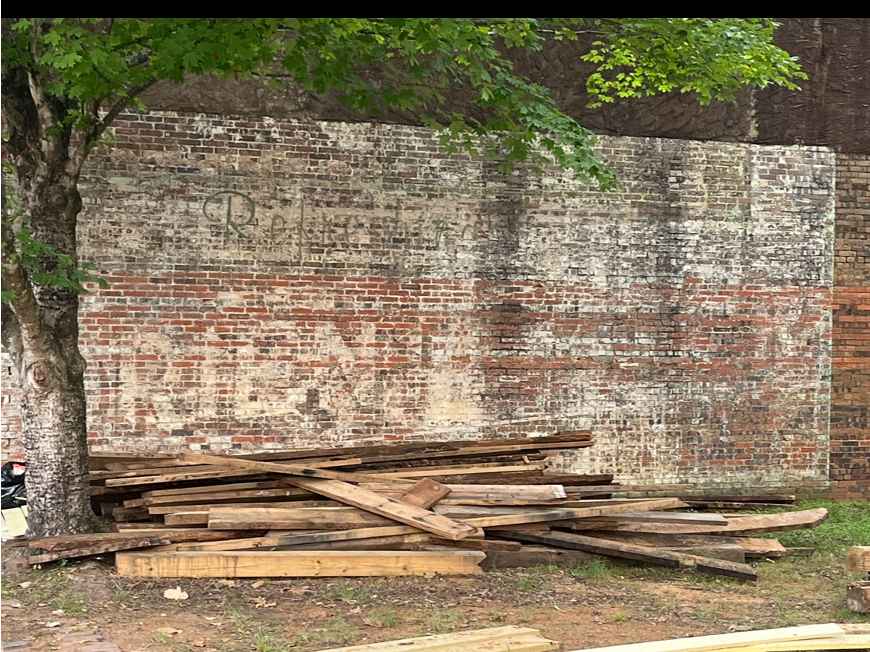
Before
After
A contemporary
touch
The restored mural brings history back to life, but it also introduces a new concept: a hashtag paired with the city's location. A modern marker used to represent current history and engage with the younger crowd and maintain its relevancy.
After restoring a mural to its original appearance, Mr. Britton and Skip decided to add a circle featuring the Coca-Cola logo and a hashtag #CokeDowntown, creating what they call a "selfie-mural." This design includes the city's name, being a reminder that you are part of something bigger, a movement that the brand remains timeless, relevant, and eager to be a part of your life just like back in time for your grandparents. Its aesthetic quality and typical downtown location allow the younger generations to grow up with the old sign but also, with something from their generation so they can connect.
With the restorations, locals don't have to remember these signs because they were brought back to its beautiful form. A feeling that they have always existed since they can remember, filled with memories. The legacy of growing up around your local sign lives on, thanks to Mr. Britton's efforts to make history alive.

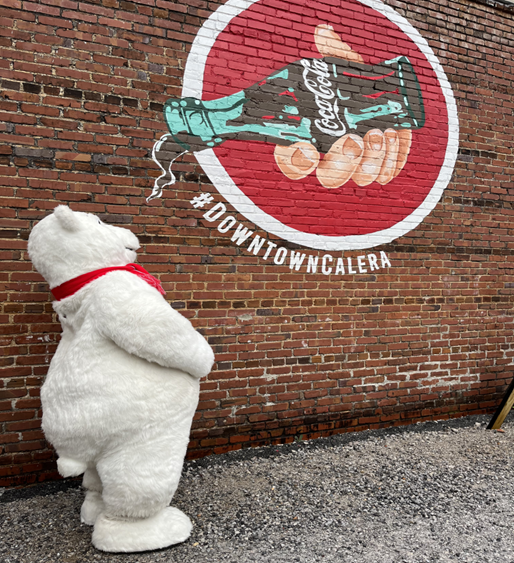
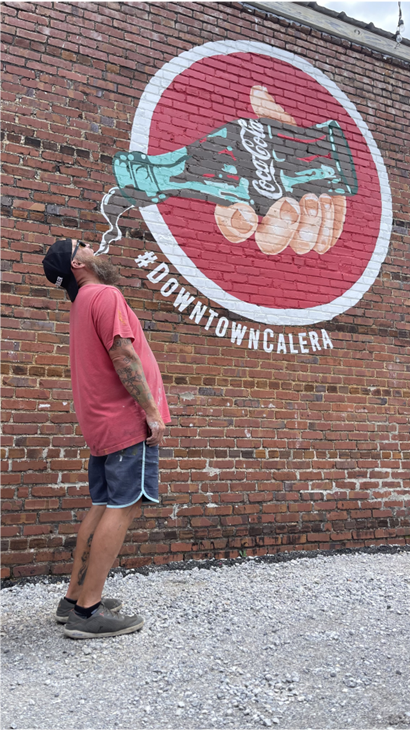
Community Engagement
Community Engagement
While other brands once created signs to advertise their products—and most of them have gone out of business and are irrelevant in the present time—restoring Coca-Cola ghost signs is relevant for the brand because it is still successful and relevant.
The existence of those signs prove their legacy and success, allowing the brand to re-engage people throughout generations, affirm that their cities and trust matter, and thank them for preserving the signs without removing them. We were here before you, we are family to you! Coca-Cola holds value because the brand, after 125 years still going strong, and still cares about the community.
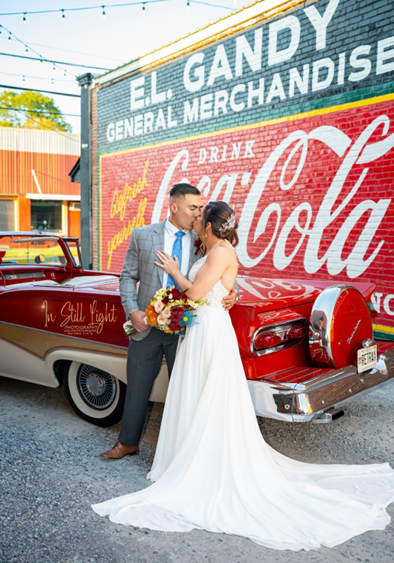
Their mural restoration efforts is a way of thanking people for letting the brand be a part of their lives for so many generations. For most of them, the brand is tied to childhood memories, family gatherings, and community events. A couple choosing a Coca-Cola sign for wedding pictures shares a piece of American history that feels comforting and familiar.